What Is Bilona Ghee, and How Is It Different from Regular Ghee?
How traditional bilona ghee is made from curd, why it needs so much more milk than cream-based ghee, and simple ways to check ghee quality at home.
· 1 min read
Two ways to make ghee
Most ghee sold in shops is made from cream (malai) separated from milk by a machine. The cream is heated until the water evaporates and what remains is ghee. It is quick and uses less milk.
Bilona ghee follows the older, slower route. Whole milk is boiled and set into curd. The curd is churned with a wooden bilona until makkhan (white butter) floats to the top. Only this makkhan is heated to make ghee.
Why bilona ghee costs more
Churning curd recovers less fat than separating cream, so bilona ghee needs roughly 25–30 litres of milk for one kilogram — about twice as much as cream-based ghee. It is also slow, hands-on work.
What A2 means
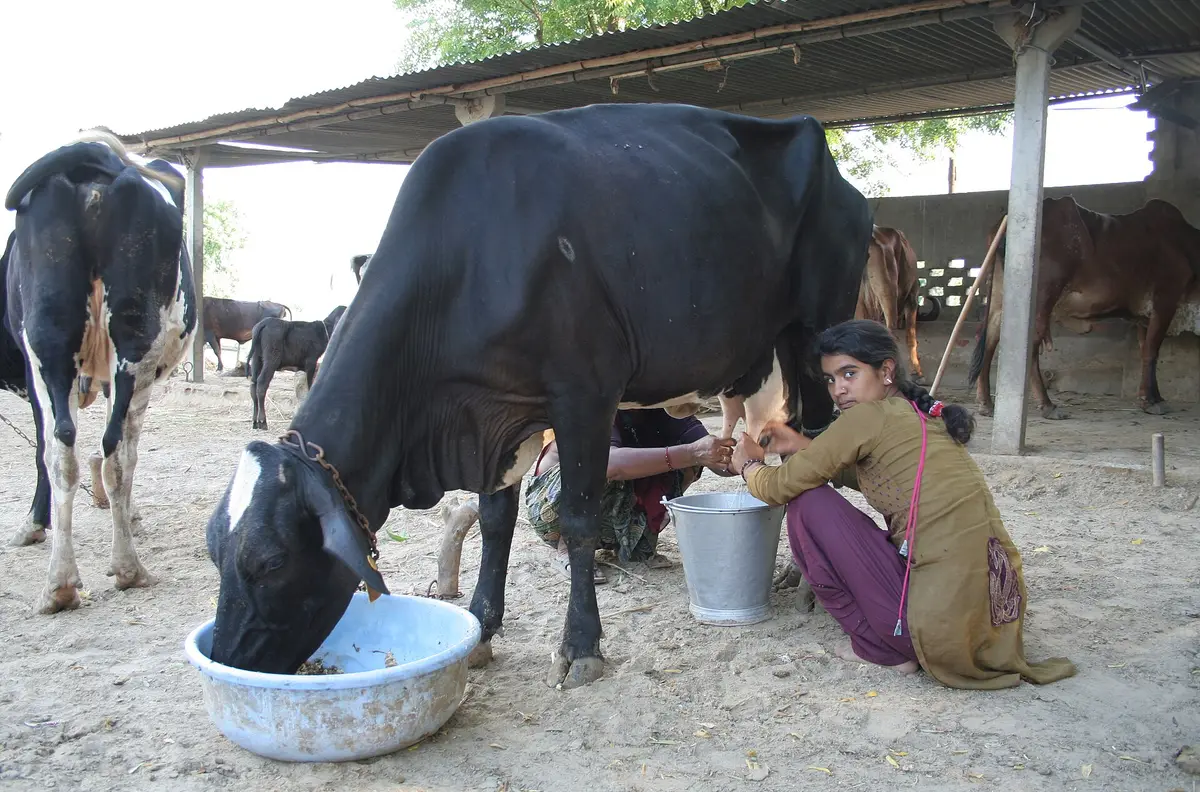
Milk contains a protein called beta-casein, which comes in A1 and A2 types. Indigenous Indian breeds such as Gir and Sahiwal produce milk with the A2 type. Ghee made from their milk is therefore called A2 ghee. Ghee is almost pure fat, so it contains very little protein of either type — the label mostly tells you which cows the milk came from.
Checking quality at home
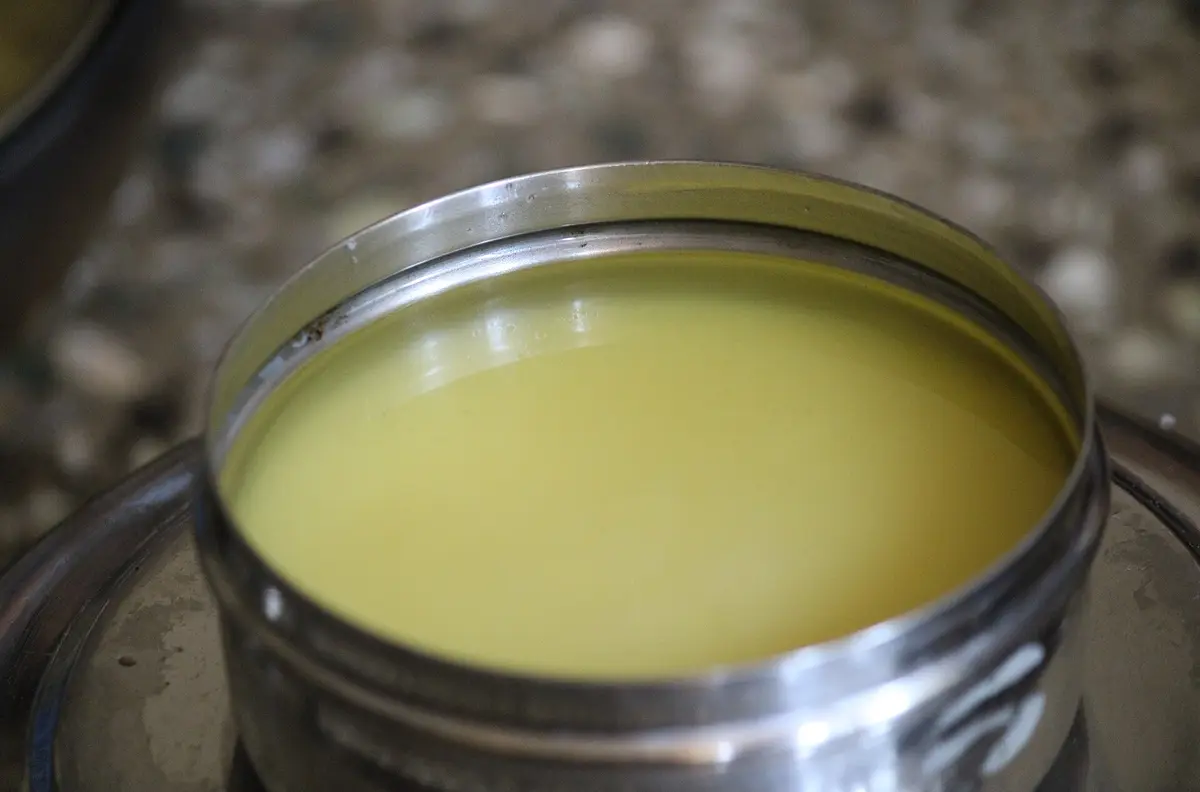
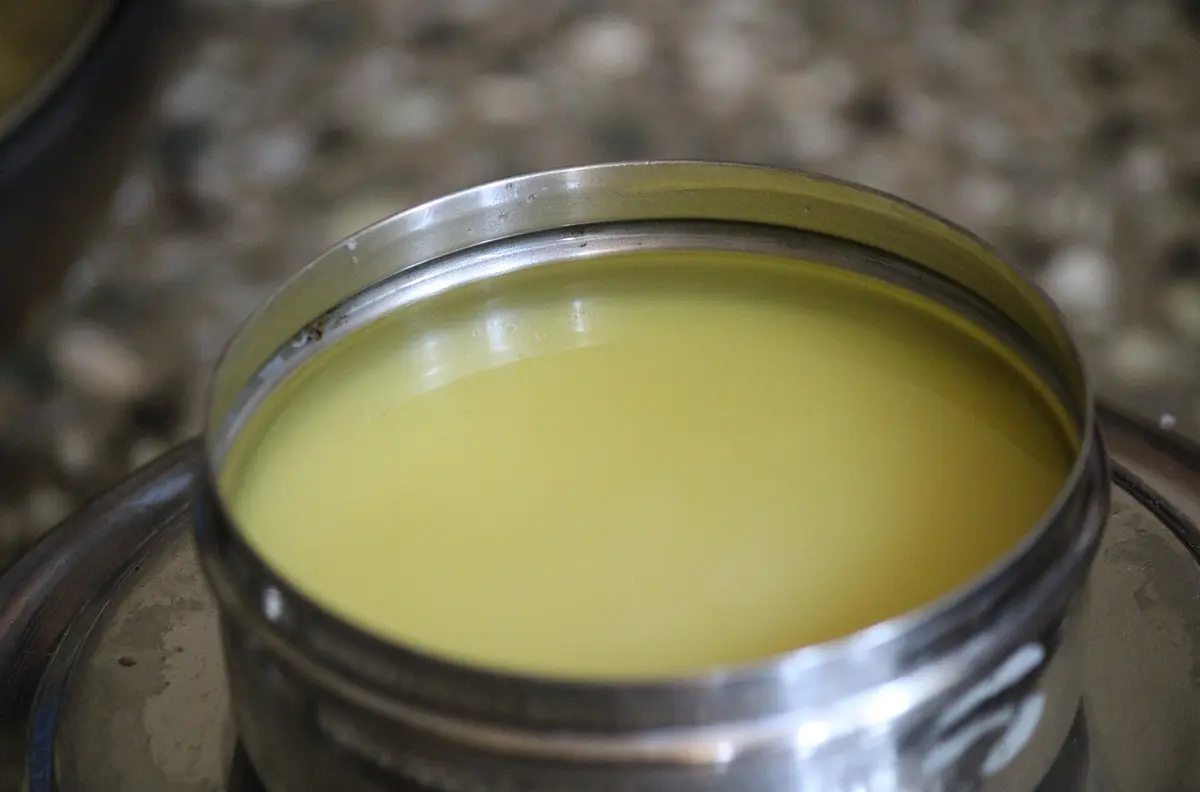
Good bilona ghee has a grainy (danedar) texture when it sets, a nutty smell, and turns clear and golden when warmed. It should melt fully on the palm of your hand.
Home tests are only rough guides. If you want certainty, ask the seller for a lab report — we are happy to share ours.